VPN meaning explained in simple terms
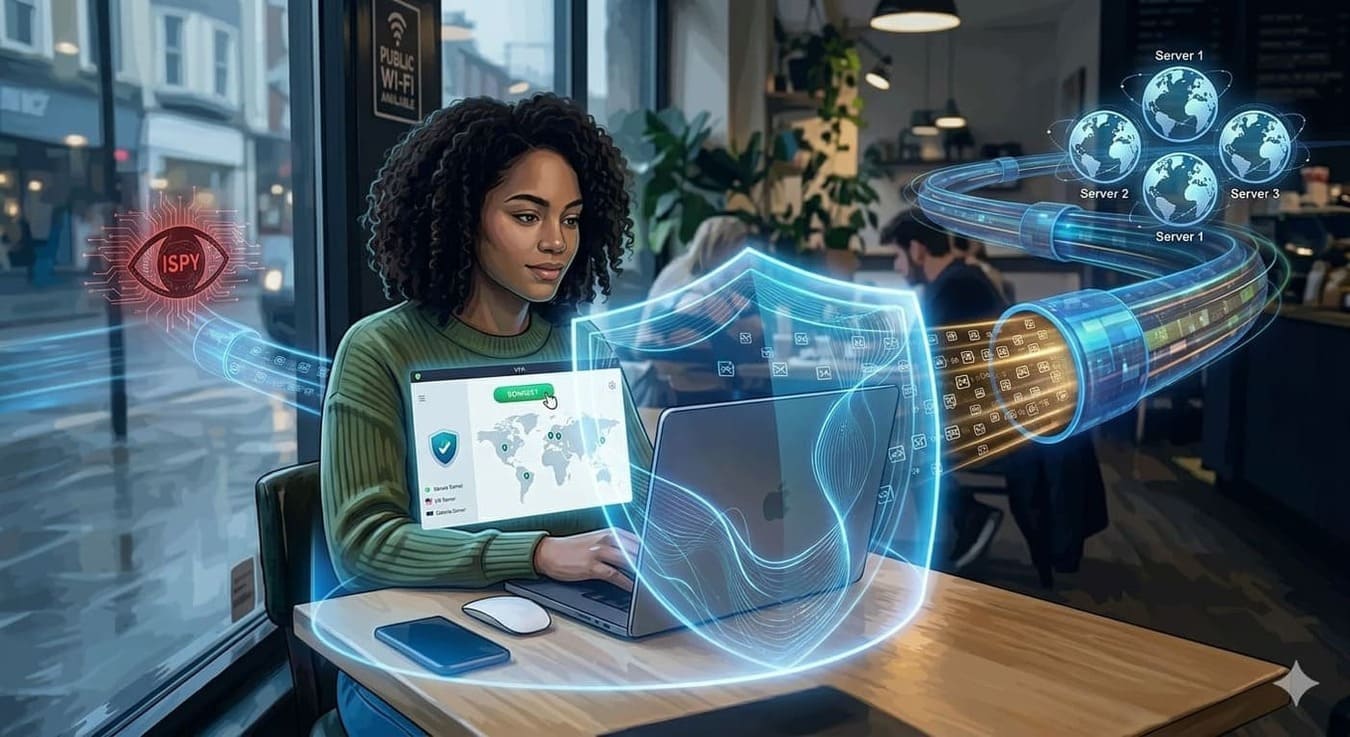
If you’ve ever felt like someone was watching over your shoulder while you browsed the web, you aren't alone. In 2026, our digital footprints are larger than ever, and that's where the vpn meaning comes into play. Think of it as a private, encrypted tunnel for your data. When you connect to the internet, your information usually travels out in the open, visible to your provider and potentially hackers. Instead, a VPN wraps that data in a protective layer, making your online life much quieter and safer. 🛡️
The beauty of it lies in its simplicity for the user. While the tech underneath is complex, for you, it's just a "Connect" button. Understanding what is vpn starts with realizing that the internet isn't naturally private. Every website you visit and every message you send leaves a trail. A VPN (Virtual Private Network) is your digital cloak, ensuring that your business remains exactly that — yours.
What is a vpn and why should you care?
To get a grip on what is a vpn?, imagine you are sending a postcard through the mail. Anyone from the mailman to a curious neighbor can read what you wrote on the back. A VPN takes that postcard and puts it inside a high-tech, armored envelope. It doesn't just hide the message; it hides who sent it and where it's going.
When people ask, "Do VPNs hide your IP address?", the answer is a resounding yes. Your IP address is like your home's physical address, but for your computer. Without a VPN, websites see exactly where you are. With one, they only see the address of the VPN server, which could be across the street or across the ocean. In 2026, with cyberattacks rising by over 20% annually, this simple switch is no longer just for "techies" — it's a basic necessity for anyone using public Wi-Fi at a café or an airport.
Can the FBI track a VPN, or is the vpn meaning all about total privacy?
This is a big one. Many users wonder, "Can a VPN be tracked?", especially by official agencies. To truly understand the vpn meaning in a legal context, you have to look at how data is handled. If you are using a high-quality service with a "no-logs" policy, there is no trail for anyone to follow because the data was never saved in the first place.
However, if you're asking "Can the FBI track a VPN?" or "Can the police track a VPN?", you should know that they don't necessarily "track" the VPN itself. Instead, they might use other methods, like timing attacks or legal orders, to get info from the provider. Interestingly, does the FBI recommend VPNs? Actually, several federal agencies, including the FBI and CISA, have suggested using them to secure connections on insecure networks. They recognize that for 99% of people, a VPN is a vital shield against garden-variety criminals. 🕵️♂️
The negative side: When shouldn't you use a VPN?
It isn't all sunshine and rainbows. You might ask, "What is the negative side of using VPN?" The most common issue is speed. Because your data has to travel to a server and get encrypted, you might see a 10% to 20% drop in your connection speed. Also, some websites — especially banks or streaming services — might get suspicious if they see you "logging in from France" when you’re actually in Chicago.
So, when shouldn't I use a VPN? Or when should you not use VPN?
- Banking: Sometimes your bank will lock your account if they see a sudden IP change.
- High-Speed Gaming: If every millisecond counts, the extra "stop" at a VPN server might cause lag.
- Trustworthy Home Networks: If you are just browsing cat memes on your secure home Wi-Fi, the extra layer might be overkill.
When deciding when shouldn't you use a VPN, think about the balance between speed and security. If you’re doing something low-risk on a trusted network, you can give the VPN a rest. 🛑
Common risks, alternatives, and the practical vpn meaning
Every tool has its limits. "What are the risks of using a VPN?" primarily involve the provider itself. If you use a "free" VPN, you are often the product. These companies might sell your browsing habits to advertisers to make money. This is exactly what you were trying to avoid!
Is there anything better than VPN? For some, yes. Technologies like **Zero Trust Network Access (ZTNA)** are becoming popular in 2026, especially for remote work. Unlike a VPN that gives you a "key to the house," ZTNA checks your "ID" every time you try to open a new door inside the network. It’s more surgical and often faster.
Also, many wonder, "Can I leave my VPN on forever?" You certainly can, and many people do for total peace of mind. Just keep an eye on your battery life (on mobile) and your speed. If things get sluggish, a quick toggle off and on usually does the trick.
How to use a VPN the right way
Now that we’ve cleared up the vpn meaning, how do you actually use this info? It’s not about being a hacker; it’s about being a smart consumer. 💡
- Choose a Reputable Provider: Avoid the "100% free" ones that clutter app stores.
- Turn it on for Public Wi-Fi: This is the #1 rule. Never log into sensitive accounts at Starbucks without it.
- Check the Kill Switch: Make sure your app has this feature. If the VPN connection drops, it cuts your internet, so you don't accidentally leak data.
- Pick the Right Server: If you’re in the US, don't pick a server in Australia unless you need to. The closer the server, the faster your speed.
By following these simple steps, you take control of your digital identity. A VPN isn't a magic wand, but it's the best tool we have to keep the internet feeling like the private space it was meant to be.